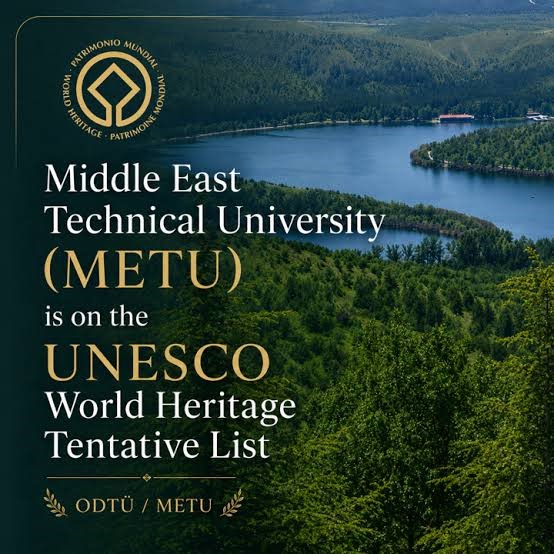


The Middle East Technical University Campus has been included on UNESCO’s World Heritage Tentative List under the title “METU Campus: A Living Modern Cultural Landscape.” The inclusion represents a major milestone in the recognition and long-term conservation of METU’s distinctive architectural, ecological, archaeological, and cultural heritage.
The nomination dossier was prepared through cooperation among the Ministry of Culture and Tourism of the Republic of Türkiye, Middle East Technical University, and the Turkish National Commission for UNESCO. Following its submission to the UNESCO World Heritage Centre, the property was officially added to Türkiye’s Tentative List in 2026. With this latest addition, Türkiye’s Tentative List now comprises 80 properties: 73 cultural, four mixed, and three natural sites.
A country’s Tentative List serves as its national inventory of properties that may be considered for future nomination to the UNESCO World Heritage List. Inclusion on the Tentative List is therefore an essential preliminary stage in the World Heritage nomination process, rather than inscription on the permanent World Heritage List itself. It establishes an international framework through which the significance, integrity, authenticity, conservation requirements, and management of a property can be evaluated and further developed.
A pioneering modern university landscape
The METU Campus was proposed under UNESCO World Heritage criteria (ii), (iv), and (v). These criteria highlight the campus’s role in demonstrating an important exchange of ideas in architecture, urban planning, technology, and landscape design; its significance as an outstanding example of a modern university campus; and its exceptional representation of sustained human interaction with the natural environment.
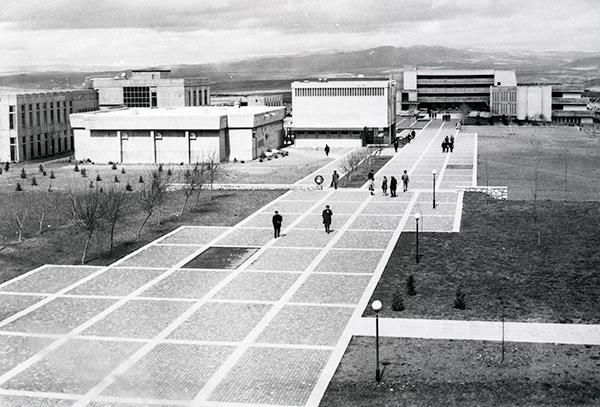
Established as one of Türkiye’s pioneering Republican-era university campuses, METU was conceived not merely as a collection of educational buildings, but as a self-sufficient academic, residential, cultural, and social settlement. The original planning approach brought educational spaces, housing, social facilities, cultural venues, sports areas, pedestrian circulation, and natural landscapes together within a unified spatial system.
The campus occupies a total land area of approximately 4,500 hectares, of which only about 800 hectares were allocated to built development. The remaining land was deliberately preserved or transformed for reforestation, steppe conservation, archaeological heritage, recreation, and ecological research. This balance between the constructed and natural environments remains one of the defining characteristics of the METU Campus.
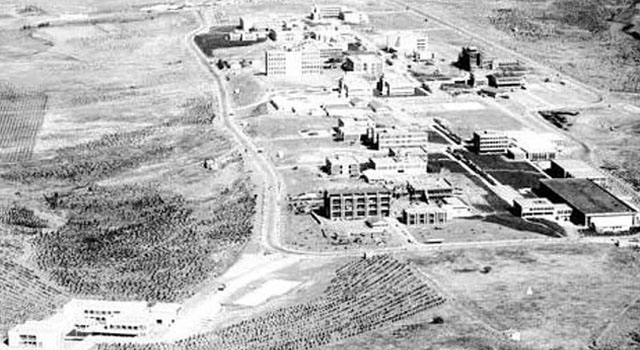
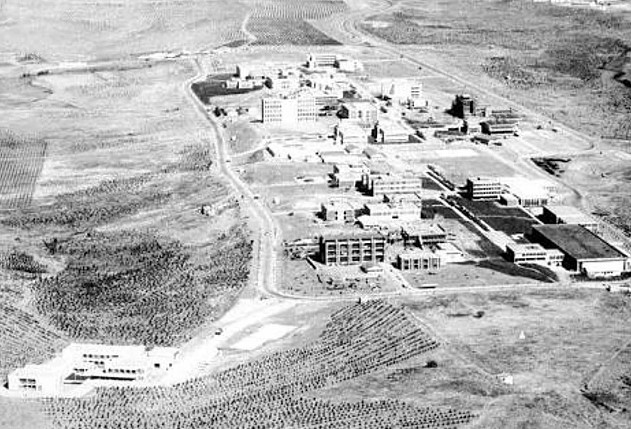
The original campus master plan and its principal buildings were developed from the early 1960s through the end of the 1970s. Despite the expansion of the University and the construction of new facilities, the principal spatial organization, architectural language, pedestrian networks, functional zones, and relationship between buildings and landscape have largely retained their integrity.
Modernism reinterpreted through Anatolia
The UNESCO nomination identifies the METU Campus as an original reinterpretation of international modernism through the historical, cultural, and environmental context of Anatolia. Rather than directly reproducing international modernist models, the campus combined their functional and technological principles with local materials, spatial traditions, artistic practices, and cultural references.
This synthesis can be observed in the architectural language of major campus buildings, including the Faculty of Architecture and the Central Library, as well as in the relationship between individual buildings and shared public spaces. The campus introduced innovative construction systems and materials to Türkiye, including folded-plate, mushroom, and cassette roof structures and advanced high-rise construction techniques. The knowledge and experience generated during the construction of METU later influenced the development of university campuses and public buildings in Türkiye and the surrounding region.
The Faculty of Architecture is recognised as an important early example of Brutalist architecture in Türkiye. Its autonomous building blocks, interconnected circulation systems, exposed materials, courtyards, passageways, and flexible spatial organization helped establish a distinctive architectural identity for the University. The Central Library also represented an important innovation by introducing the open-shelf library system to Türkiye.
Traditional Anatolian and Ottoman spatial concepts were not replicated literally but were reinterpreted within the campus’s modern architectural vocabulary. Concepts associated with communal life, gathering, collective decision-making, and shared public space were incorporated into buildings and open spaces through contemporary forms.
One of the clearest examples is the pedestrian axis widely known as the Alley, which forms the social and spatial spine of the campus. Conceived as a contemporary forum, the Alley connects academic buildings and shared facilities while serving as a setting for encounters, discussion, celebration, cultural exchange, and collective memory. Its function has been compared conceptually with the agora and forum as historical centres of public life.
The architectural significance of the campus has also received international recognition. In 2017, the METU Faculty of Architecture was selected for support through the Getty Foundation’s Keeping It Modern initiative, which promotes the conservation of outstanding works of twentieth-century architecture. The METU Reforestation Programme had previously received the Aga Khan Award for Architecture in 1995.
A landscape created through collective environmental stewardship
A central element of the nomination is the transformation of the METU Campus from a largely degraded and erosion-prone landscape into a mature forest-steppe ecosystem. When approximately 4,500 hectares were allocated to the University in 1956, much of the land consisted of agricultural fields, degraded grazing areas, and parts of the Central Anatolian steppe affected by prolonged human use.
Beginning in the 1960s, the METU community undertook a long-term and scientifically informed reforestation campaign. Instead of relying solely on uniform conifer plantations, the programme used a diverse combination of trees, shrubs, and plant species compatible with the ecological characteristics of the Central Anatolian steppe. This approach was highly progressive for its period and contributed to the emergence of a heterogeneous, resilient, and biodiverse landscape.
The Aga Khan Award recognised the programme’s role in protecting university land from urban development, reducing erosion, supporting the response to Ankara’s air pollution, and afforesting a substantial proportion of the University’s property. Today, the METU Forest is not only one of Ankara’s most significant green areas but also an important example of ecological restoration achieved through long-term institutional vision and community participation.
According to the UNESCO nomination, the campus and forest support approximately 700 plant species, 226 bird species, 23 mammal species, nine reptile species, and 126 butterfly species. Around 50 of the plant species recorded in the area are endemic to Türkiye. The coexistence of forest, steppe, wetlands, rocky slopes, riparian vegetation, meadows, and former agricultural areas creates a wide range of habitats within the campus boundaries.
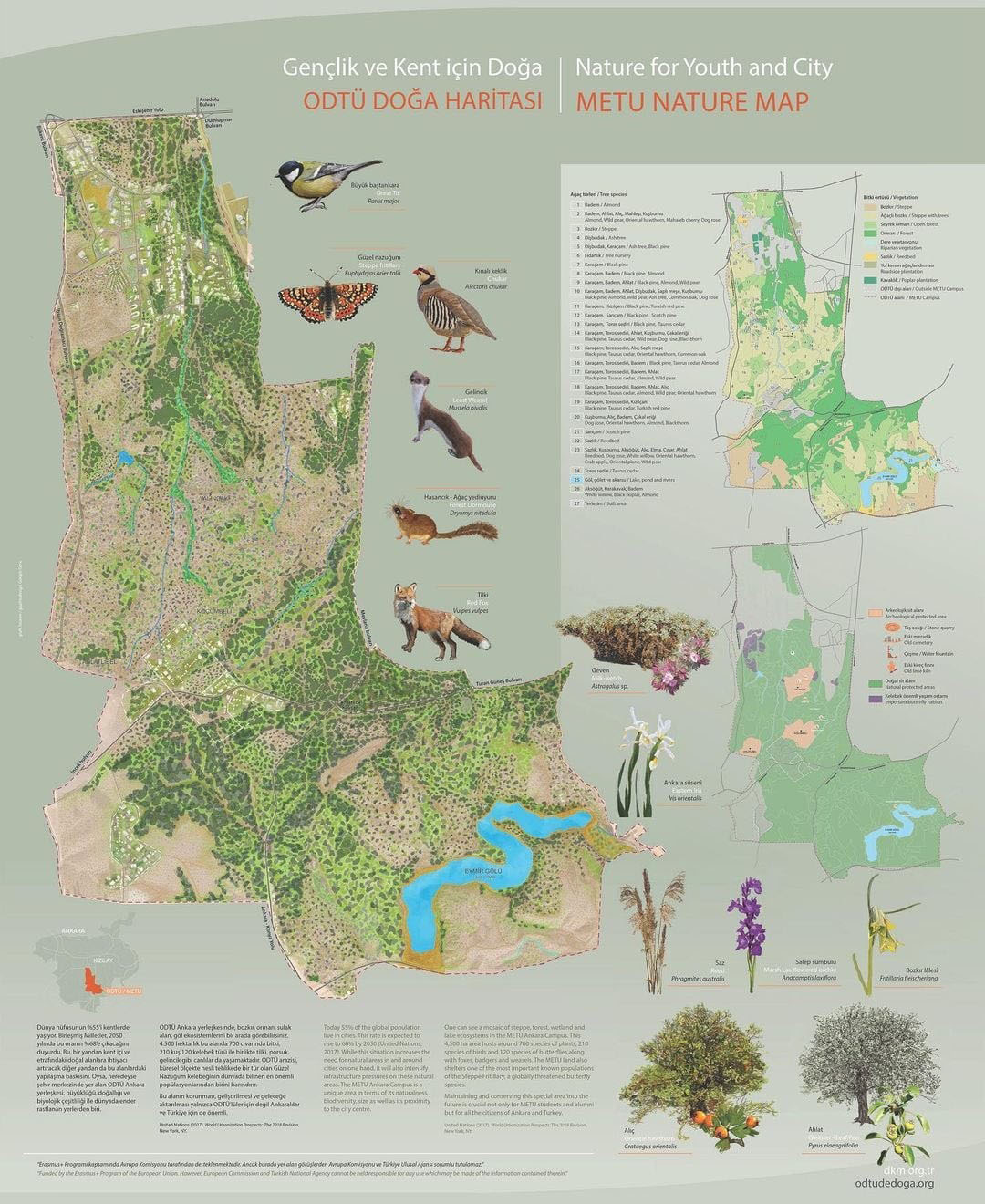
The protected steppe areas are particularly important because the Central Anatolian steppe is increasingly affected by urbanisation, agricultural conversion, grazing, and habitat fragmentation. Relatively undisturbed steppe habitats within the METU Campus therefore function as a refuge for native plants, insects, birds, and other organisms.
Lake Eymir and its surrounding landscape further strengthen the ecological identity of the property. The lake is integrated into the University’s research, recreation, sports, conservation, and environmental monitoring activities. METU researchers have conducted long-term ecological monitoring and restoration programmes in Lake Eymir, Lake Mogan, and their catchment areas, including interventions designed to improve water quality and restore ecological balance.
Five thousand years of cultural continuity
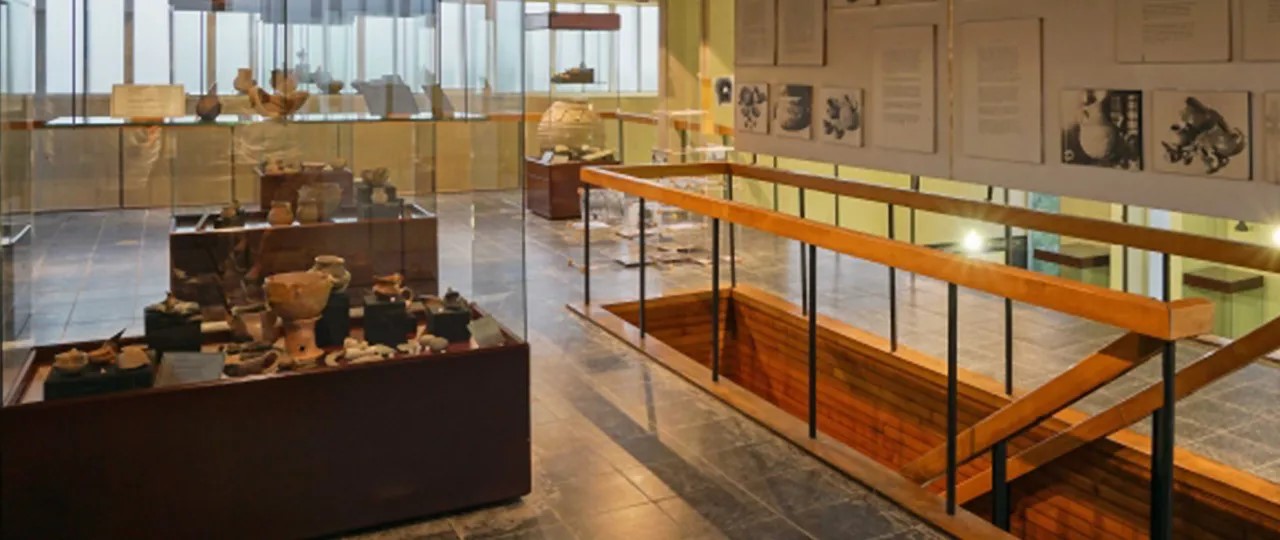
The METU Campus is also distinguished by the integration of archaeological heritage into a functioning modern university environment. Archaeological remains within the campus bear evidence of approximately 5,000 years of settlement and human activity, encompassing the Early Bronze Age, Phrygian, Roman, Byzantine, Ottoman, and early Republican periods.
Rather than treating these archaeological sites as isolated monuments, the campus planning approach incorporated them into the wider natural and architectural landscape. Finds from settlements such as Yalıncak and Koçumbeli were preserved, studied, and interpreted in relation to their original setting.
The METU Archaeology Museum, located on campus, is regarded as an early and progressive example of displaying archaeological objects close to the landscape in which they were discovered. By maintaining the connection between artefacts, archaeological sites, and their environmental context, the museum contributes to a continuous relationship between the past and the everyday life of the University.
The result is a rare spatial system in which archaeological layers, modern architecture, ecological restoration, education, research, and social life coexist. The campus can therefore be understood not only as a major work of modern architecture and planning, but also as a landscape in which multiple historical periods remain visible and meaningful.
A living cultural landscape
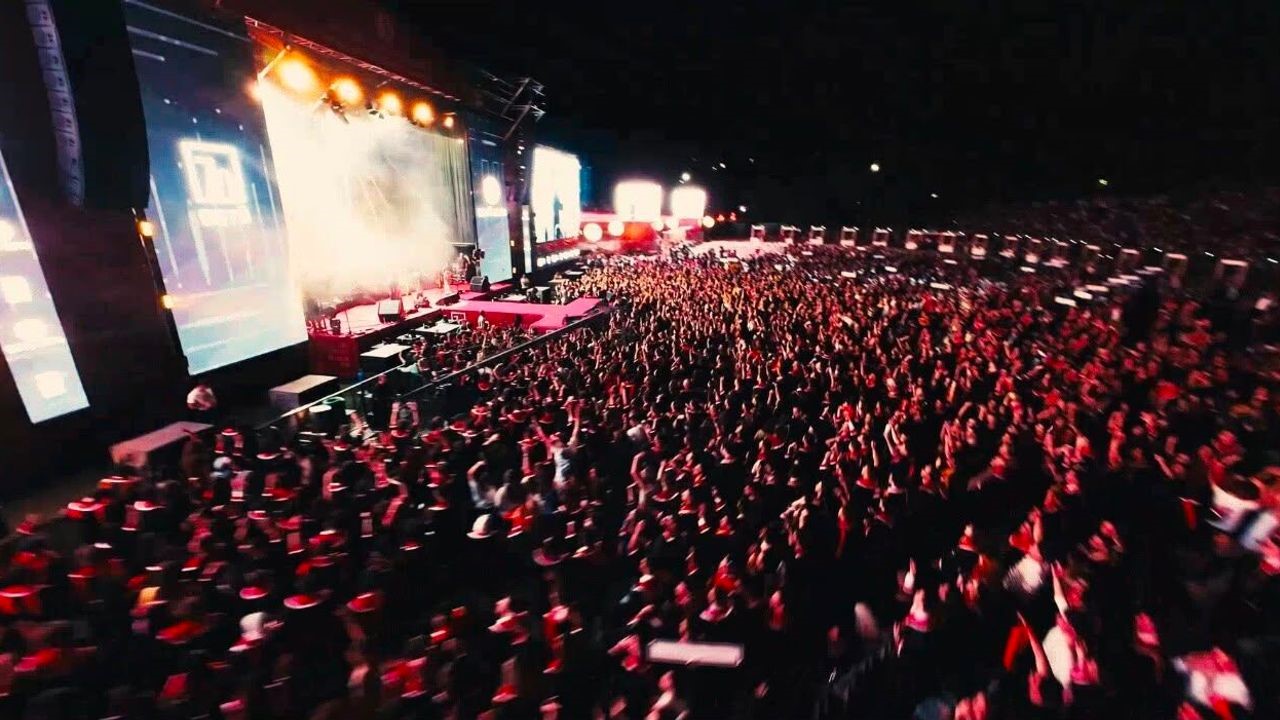
The designation “living modern cultural landscape” also emphasises that the significance of METU extends beyond its physical attributes. The campus continues to fulfil its original educational and social purposes and is continuously shaped by the activities, traditions, values, and collective practices of its community.
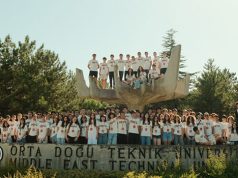
Graduation ceremonies, alumni gatherings, spring festivals, cultural and sporting events, student society activities, meetings along the Alley, recreational activities at Lake Eymir, and community involvement in the protection of the forest have created a rich body of intangible heritage. These traditions connect successive generations of students, alumni, faculty members, researchers, and administrative staff to the campus.
The campus also functions as a living laboratory for architecture, planning, conservation, archaeology, ecology, environmental engineering, biodiversity, and sustainability research. A GIS-based spatial decision-support system developed at METU has been used to document and monitor the cultural and spatial values of the campus and to support conservation and management planning. Earlier academic work at METU systematically identified the campus’s architectural, cultural, archaeological, social, and environmental values as a foundation for its potential recognition as World Heritage.
The nomination dossier notes that the METU community itself remains one of the most important guardians of the campus. The strong sense of ownership shared by students, staff, faculty members, and alumni has played a central role in sustaining its ecological, architectural, and cultural integrity.
A new stage in the conservation of METU’s heritage
The inclusion of the METU Campus on UNESCO’s World Heritage Tentative List is an important international acknowledgement of the University’s unique relationship with architecture, education, nature, archaeology, and collective life. It also introduces new responsibilities relating to documentation, conservation, management, monitoring, and the transmission of the campus’s values to future generations.
The process leading to this milestone has been supported by many years of academic research, conservation studies, ecological monitoring, spatial documentation, institutional cooperation, and community engagement. The Tentative List status provides a stronger platform for continuing these efforts and for developing the comprehensive nomination, management, and conservation frameworks required for possible future consideration for the UNESCO World Heritage List.
More than a university setting, the METU Campus represents an evolving cultural landscape in which modern architectural ideals, Anatolian traditions, ecological restoration, archaeological continuity, scientific research, and community life have developed together for more than six decades. Its inclusion on the Tentative List celebrates this distinctive legacy while reinforcing a shared commitment to preserving the campus as a place of education, memory, biodiversity, creativity, and public value for future generations.