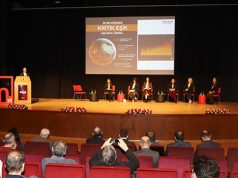


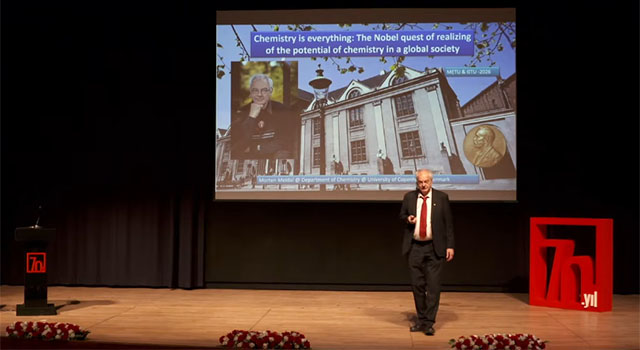
As part of the “Distinguished Lecture Series” launched for METU’s 70th anniversary celebrations, METU continues to host internationally respected, leading scientists in their fields. In this context, at the event held on April 9, 2026 with the contributions of the Chemists’ Society, Prof. Morten Meldal, recipient of the 2022 Nobel Prize in Chemistry, delivered a lecture titled “Click Chemistry” at Kemal Kurdaş Hall of the METU Culture and Convention Center.
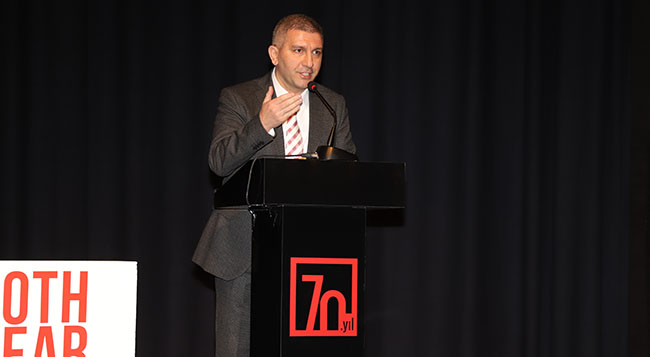
Speaking at the opening of the event, Erhan Atıcı, representative of the Turkish Chemists’ Society, emphasized that chemistry is a transformative force in every aspect of life, from academia and industry to health and the environment. Atıcı noted that the Society not only organizes scientific meetings but also carries out activities that support students’ professional development, adding that supporting young chemists and preparing them for ambitious goals is an important responsibility.
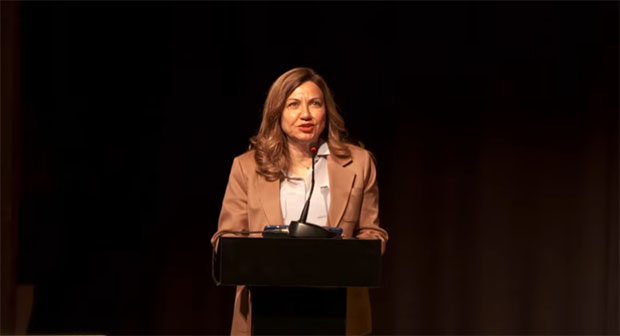
METU Vice President Prof. Tülin Gençöz stated that Prof. Morten Meldal’s pioneering work in click chemistry transformed the understanding of molecular design and synthesis, opening up new possibilities in fields ranging from drug discovery to materials engineering. Following the opening remarks, a short introductory video on Prof. Meldal was screened.
The video emphasized that click chemistry offers a more selective, rapid, and efficient approach compared to conventional chemical synthesis methods, and that it has had transformative effects in areas such as targeted cancer therapies, DNA mapping, and advanced materials production. In the video, Prof. Meldal also said that the experiments he conducted with chemicals in his youth—even those that ended in an explosion—only deepened his desire to understand how and why chemistry works.
Taking the stage after the screening, Prof. Meldal explained that in his lecture he approached chemistry not merely as a scientific discipline, but as a fundamental reality that explains life itself, noting that everything from hunger and love to materials and transformations in nature is related to molecular interactions. Emphasizing that younger generations should be taught chemistry from an early age through more visual, three-dimensional, and intuitive methods, Prof. Meldal drew attention to the importance of new educational approaches enriched by videos, virtual reality applications, AI-supported content, and physical models.
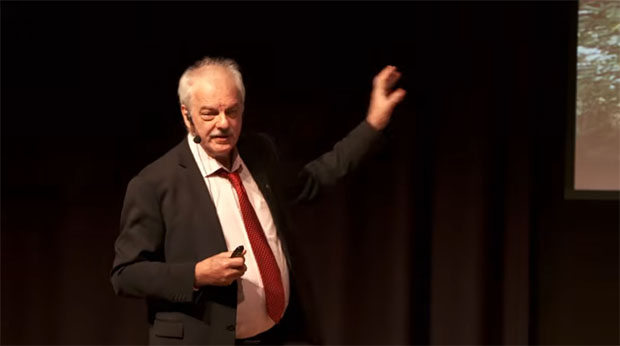
Addressing the way science advances, Prof. Meldal said that major discoveries are often born not from detailed plans, but from the careful evaluation of unexpected observations. Stressing that scientific creativity, intuition, observational ability, and persistence must lie at the center of research processes, he stated that one of the defining qualities of a good scientist is the ability to notice the unusual and pursue it.
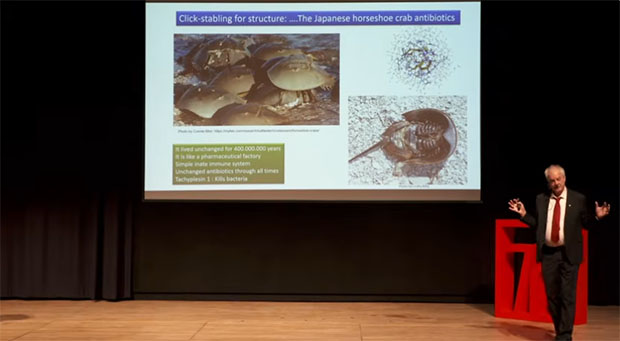
The scientific focus of the lecture was click chemistry and peptide-based chemistry. Prof. Meldal explained that click chemistry initially emerged when an unexpected product was noticed during an experiment being carried out for a different purpose, and that thanks to its selectivity, high yield, and compatibility with biological systems, it has become a powerful tool in modern chemistry. He illustrated, with examples, how this approach is used across a wide range of areas, from antibacterial peptides to protein recognition systems, from molecules that transport substances into cells to the reassembly of complex protein structures.
Another prominent topic in Prof. Meldal’s lecture was his work related to Alzheimer’s disease. He spoke about the research his team has been conducting on peptide structures designed to prevent the formation of beta-amyloid fibrils and, in some cases, to dissolve preformed fibrils. He noted that these studies may contribute to a better understanding of the mechanisms underlying the progression of the disease.
In the concluding part of his lecture, Prof. Meldal placed the scientific discussion in a broader global context, emphasizing that the strongest response to wars, the climate crisis, plastic pollution, pandemics, and growing social fragilities lies in education, basic science, and well-organized research environments. Pointing to the importance of encouraging young people to engage with fields such as sustainable chemistry, new materials, energy, food, and the environment, he stated that strong scientific production is only possible through free, curious, and well-supported teams.
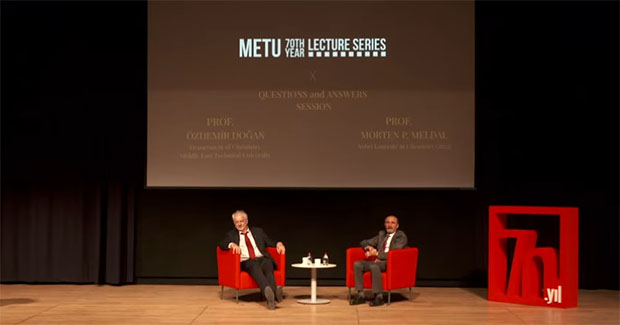
Following the lecture, the question-and-answer session was moderated by Prof. Özdemir Doğan of the METU Department of Chemistry. At the beginning of the session, Doğan thanked Erhan Atıcı of the Turkish Chemists’ Society, Prof. Y. Eren Kalay, who took part in organizing the event, and all participants. At the end of the program, METU Vice President Prof. Tülin Gençöz presented Prof. Morten Meldal with a certificate of appreciation and a gift on behalf of METU.
In the afternoon session of the event, Dr. Phaedria Marie St. Hilaire delivered a talk titled “Navigating Careers in STEM”.