


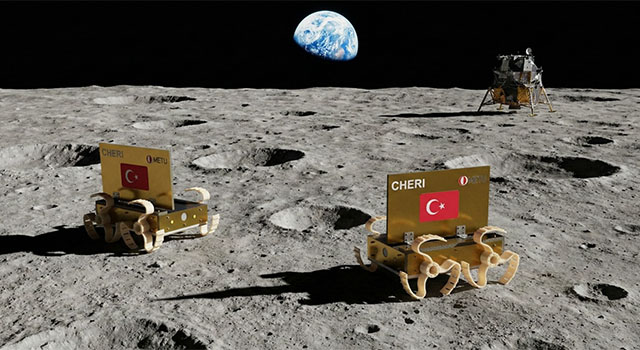
Middle East Technical University (METU) is set to mark a significant milestone in space exploration, as two autonomous micro rovers developed at the university will be deployed to the South Pole of the Moon as part of China’s Chang’e-8 lunar mission, making Türkiye the first country ever to land and operate multiple rovers on the lunar surface simultaneously. The rovers are being engineered under the CHERI project (Challenging Environment Exploration Rovers for Intelligence) by researchers at METU Center for Robotics and Artificial Intelligence (ROMER).
The CHERI project places METU alongside the China National Space Administration (CNSA), and STAR.VISION in a multilateral collaboration aimed at exploring the Moon’s South Pole. The broader mission serves China’s ambitions to identify a suitable site for the International Lunar Research Station (ILRS), planned for construction in the 2030s.
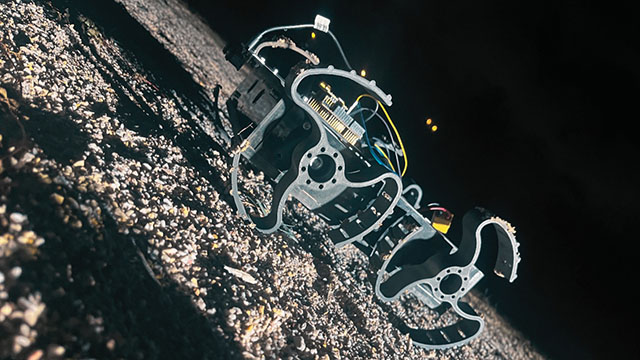
Each of the two CHERI micro rovers weighs approximately five kilograms and is roughly the size of a shoebox. Despite their compact form, the rovers are engineered to withstand the Moon’s extreme environmental conditions. Working in tandem, they will autonomously collect scientific data from the lunar South Pole, conduct on-site analyses, perform AI-assisted 3D mapping of the surface, and relay navigational information to one another. They will also gather temperature and radiation measurements from the Moon’s harsh environment. In a mission first, the two rovers will be released on separate days, with the second rover capturing the landing of the first on video, which will be an unprecedented approach in lunar exploration that promises to yield valuable documentation and scientific insight.
Inspired by history, advancing space exploration
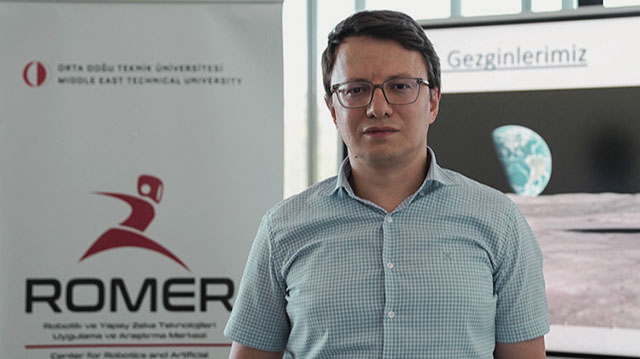
The name CHERI was inspired by the elite soldiers of the Ottoman army, the Janissaries, as noted by Assoc. Prof. Halil Ersin Söken from the Department of Aerospace Engineering at METU, who serves as the project’s principal investigator. “This will be the first space mission in which two robots interact with one another on the Moon,” said Söken, highlighting that the dual-rover operation represents a world first. Upon successful completion, the mission will also make Turkiye the sixth country in the world to have landed a rover on the lunar surface, with launch currently scheduled for 2029, according to SpaceNews.
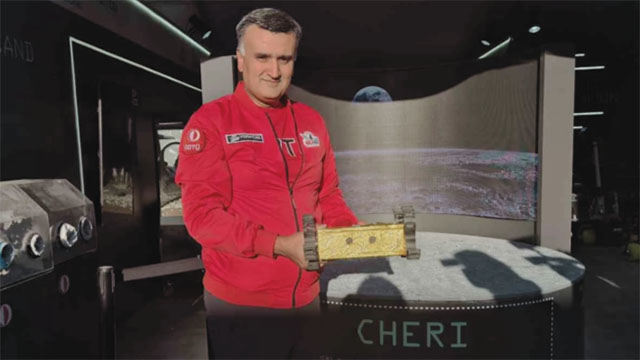
METU President Prof. Ahmet Yozgatlıgil described the mission as a reflection of the university’s commitment to national progress in space research and international scientific cooperation. “As we strengthen our country’s presence in space, we are building a competitive, independent, and innovation-driven ecosystem for the future,” he said. Prof. Yozgatlıgil also drew a parallel between the previous generation of pioneering researchers at METU and the work being carried out today, referencing Project ORDOT, the 1969 initiative under which Turkey’s first rocket was launched from the METU Campus in Ankara.
ROMER as a national hub for robotics innovation
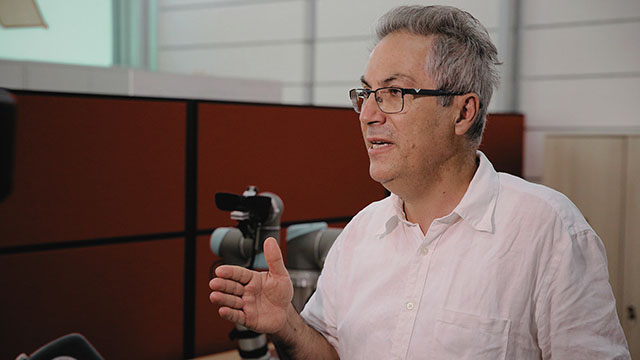
Assoc. Prof. Erol Şahin, the founding Director of METU ROMER, emphasized that their research center was conceived from its inception not merely as an academic laboratory, but as a national technology hub for robotics. Beyond the CHERI project, ROMER pursues a wide spectrum of R&D activities, encompassing humanoid robots, robotic manipulators, and unmanned vehicles. It supports academic research through national funding bodies such as TÜBİTAK as well as international programs including EU initiatives, while also providing expertise and solutions to industry partners in the field of robotic systems.
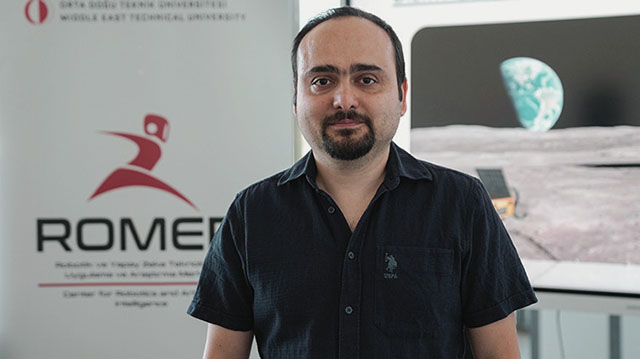
Assoc. Prof. Mustafa Mert Ankaralı, the Deputy Director of METU ROMER, stressed that while CHERI represents just a beginning, it constitutes a pivotal step for the country. He outlined an ambitious horizon of possibilities that this mission could open up, including future expeditions to Mars or asteroids, missions involving larger robots, sample-return operations that would bring extraterrestrial material back to Earth for study, and even the construction of structures on the Moon using lunar soil and 3D printing technologies.
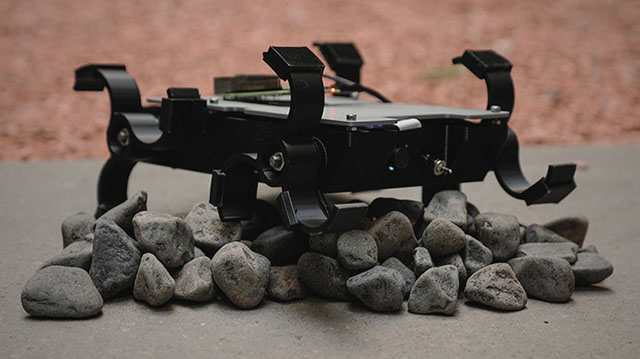
A multidisciplinary effort with international reach
The project brings together a multidisciplinary team of researchers from METU’s main campus in Ankara and the Northern Cyprus Campus (METU NCC), with contributions from various academic departments. The technical development is led by a team of faculty members, while undergraduate and graduate students actively participate in research activities within METU ROMER. President Prof. Yozgatlıgil noted that this wide-ranging institutional involvement, spanning departments, programs and campuses, is an indication of the strength of METU’s research ecosystem and the potential of its young human capital.
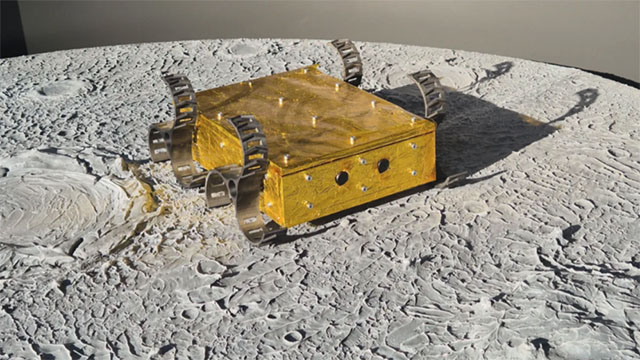
The CHERI mission marks a defining moment for METU and for Türkiye’s place in the global space community. By contributing an autonomous dual-rover system to one of the most significant lunar missions in recent years, the university demonstrates that Turkish engineering expertise is not merely keeping pace with the world’s leading space programs, but it is making meaningful contributions to them.