

As part of its milestone 70th-anniversary celebrations, Middle East Technical University brought internationally renowned scientists, industry leaders, and accomplished alumni together with the METU community through its Distinguished Lecture Series and Distinguished Alumni Seminar Series.
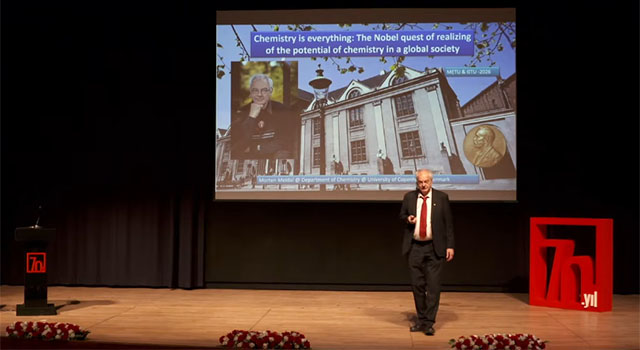
Among the distinguished guests was Prof. Morten Meldal, recipient of the 2022 Nobel Prize in Chemistry and one of the scientists behind the development of click chemistry. During his lecture titled “Click Chemistry” Prof. Meldal discussed the scientific principles and wide-ranging applications of this transformative approach to chemical synthesis. He also emphasized the importance of basic science, education, research freedom, and interdisciplinary collaboration in addressing global challenges such as climate change, pollution, pandemics, and resource scarcity.
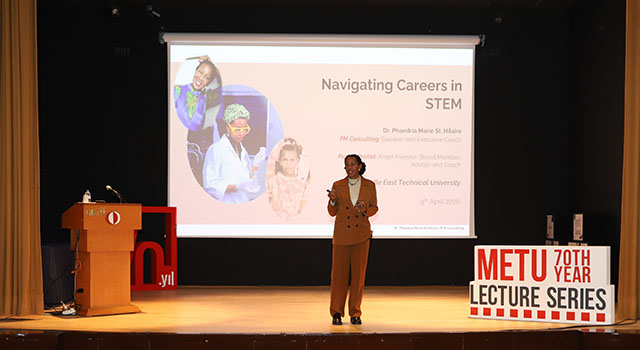
The programme also welcomed Dr. Phaedria Marie St. Hilaire, an internationally recognised leader with extensive experience in the pharmaceutical and biotechnology sectors. Drawing on her career across science, investment, leadership, and advocacy, Dr. St. Hilaire addressed the different dimensions of careers in science, technology, engineering, and mathematics. Her seminar also highlighted the importance of diversity, equity, inclusion, and belonging in scientific and technological fields, particularly in rapidly developing areas such as artificial intelligence, engineering, and biotechnology.
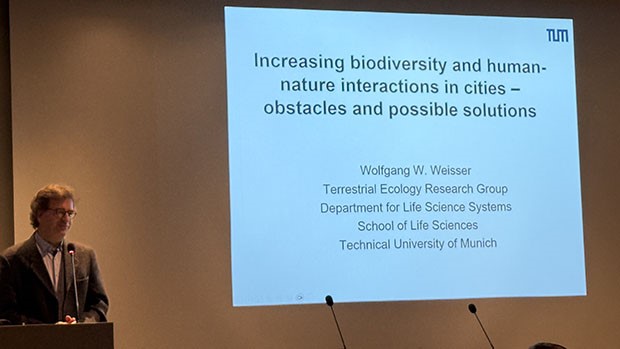
Reflecting METU’s strong emphasis on sustainability and interdisciplinary approaches, Prof. Wolfgang Weisser, Head of the Terrestrial Ecology Research Group at the Technical University of Munich, delivered a lecture titled “Increasing Biodiversity and Human–Nature Interactions in Cities: Obstacles and Possible Solutions”.
Organised on the occasion of the International Day for Biological Diversity, the seminar explored how urban planning, land use, and human activity affect biodiversity and ecological systems. Prof. Weisser discussed the barriers to creating more biodiverse cities and presented possible approaches for strengthening interactions between people and nature in urban environments. His lecture connected ecological research with architecture, urban development, public policy, and sustainable land-use strategies.
The Distinguished Lecture Series continued with Prof. F. Dean Toste, Chair of the Department of Chemistry at the University of California, Berkeley, who delivered a seminar titled “Chemistry for a Sustainable Future”.
An internationally renowned organic chemist, Prof. Toste is known for his pioneering research in modern catalytic methods, homogeneous gold catalysis, asymmetric catalysis, and selective organic synthesis. In his lecture, he examined the role chemistry can play in building a more sustainable future by enabling the conversion of solar energy, biomass, and waste into clean fuels, chemicals, and advanced materials.
Prof. Toste also discussed the challenges associated with replacing fossil-based energy and material systems. He emphasized the need for safe, affordable, and scalable energy-storage technologies and presented examples of how widely used materials, including polymers such as nylon, could potentially be produced using renewable carbon sources rather than petroleum. His seminar underlined that sustainable chemical technologies must be environmentally responsible, economically viable, safe, and suitable for industrial-scale implementation.
Prof. Toste is a member of the U.S. National Academy of Sciences and the American Academy of Arts and Sciences. His scientific achievements have been recognised through several prestigious honours, including the Humboldt Research Award and the Janssen Prize for Creativity in Organic Synthesis.
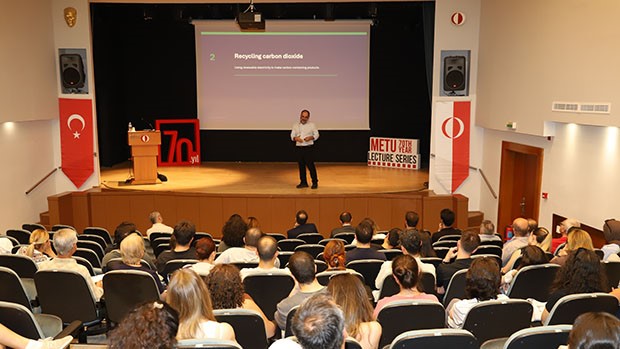
Naeem Zafar, who teaches entrepreneurship and innovation at the University of California, Berkeley, delivered a seminar titled “Silicon Valley Trends & Entrepreneurship Lessons from Silicon Valley”. Drawing on his extensive experience as an entrepreneur, educator, and innovation adviser, Zafar shared insights into emerging trends in Silicon Valley, the development of entrepreneurial ecosystems, and the practical lessons that can be drawn from both successful and unsuccessful ventures.
His seminar provided students and researchers with a broader understanding of how technological ideas can be transformed into scalable enterprises. He also addressed the importance of identifying real-world problems, understanding users, building effective teams, adapting to uncertainty, and developing an entrepreneurial mindset.
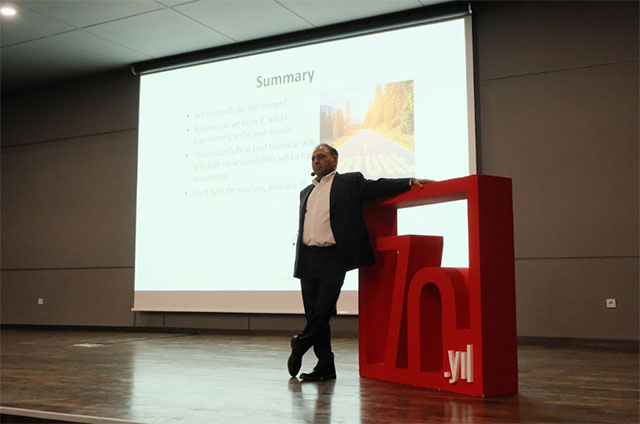
Prof. Rizwan Uddin (ME ’80), a faculty member at the University of Illinois Urbana-Champaign, delivered a seminar titled “Nuclear Energy: From GEN-II to GEN-IV Reactors—for Mechanical and Other Engineers”.
In his presentation, Prof. Uddin reviewed the development of nuclear energy technologies from second-generation reactors to advanced fourth-generation reactor concepts. He discussed developments in reactor safety, efficiency, sustainability, fuel utilisation, and waste management, while also explaining the role that nuclear energy may play in future low-carbon energy systems.
Addressing an audience extending beyond nuclear engineering specialists, Prof. Uddin presented the subject from a broad engineering perspective and highlighted the importance of multidisciplinary expertise in developing and operating future nuclear technologies.
Together, these lectures and seminars created opportunities for students, faculty members, researchers, alumni, and members of the wider university community to engage directly with leading figures from academia, industry, and innovation. The events encouraged participants to consider not only the latest scientific and technological developments, but also the wider environmental, ethical, social, and economic dimensions of research and innovation.
Through the Distinguished Lecture Series and Distinguished Alumni Seminar Series, METU reaffirmed its role as an international centre for intellectual exchange. The programmes contributed to a vibrant academic environment that promotes scientific curiosity, interdisciplinary collaboration, global engagement, and continuous learning.
By bringing Nobel laureates, internationally recognised researchers, sector leaders, and distinguished alumni to campus, METU celebrated its 70-year legacy while creating new connections and conversations that will help shape the future of science, technology, society, and innovation.