

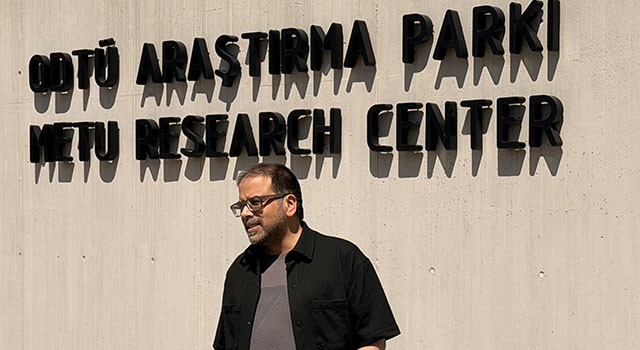
If we begin with the question “What does the Office of Research Coordination do?” we can define it as the coordination office that supports and guides faculty members throughout the entire research process — from the initial idea stage to the point where a project is ready to begin officially — while also encouraging them to apply for suitable funding opportunities and projects.
Although the research-related dimension is the most direct aspect of what we do, the Office of Research Coordination is not limited to this alone. Our office also includes several different structures and responsibilities. For example, the coordination of national and international award applications representing our university is also carried out by the Office of Research Coordination. This includes all related processes, from identifying potential nominees to managing applications, and has become a good practice model that other universities also look to as an example. We have dedicated personnel working specifically on awards such as the TÜBİTAK Incentive Awards, TÜBİTAK Science Awards, Council of Higher Education (YÖK) Awards, L’Oréal Awards, and GEBİP Awards, all under the umbrella of our office.
In addition, independent of research projects themselves, we also oversee processes related to postdoctoral researchers and visiting scholars. Furthermore, YÖK launched a program in 2019 focusing on the employment of postdoctoral researchers and the engagement of qualified researchers in Türkiye. This program is particularly important to us in terms of strengthening international collaborations and university–industry cooperation, and it is likewise coordinated by our office.
Another responsibility of the Office of Research Coordination is the monitoring and reporting of the activities of all our Research Centers — 31 centers established within our university, as well as NÖROM, which is jointly operated with Ankara University and Gazi University. This includes reporting activities to YÖK and guiding faculty members through the establishment process whenever a new center is proposed.
In addition to the Project Support Office, which operates within the framework I mentioned earlier, we also established the Project Development Office around one and a half years ago. This team works in a more targeted and hands-on manner, providing one-on-one support to faculty members during the project writing process. Through this office, we focus particularly on larger-scale projects such as ERC grants and consortium coordinatorships.
More recently, we have also begun supporting the Office of Institutional Development and Planning in monitoring the university’s research performance. We are currently transitioning to a system through which we will be able to track academic performance evaluations, academic incentive processes, and the research performance of our units in real time. This initiative is also being carried out by our office.
What does the Office of Research Coordination do to help qualified international researchers who come to METU remain at the university after their projects are completed and become integrated into METU’s established research culture?
TÜBİTAK has two reverse brain drain programs: the 2232 International Leading Researchers Program and the International Young Researchers Program. This year, particularly within the scope of these programs, we conducted an extensive search through Web of Science and invited researchers accordingly. We facilitated meetings between these researchers and our academic units, and ultimately received around 16 applications for the 2232 program.
The 2232 program is highly prestigious, and in most cases, nearly 80% of those who receive this fellowship are eventually able to secure academic positions through consultations with the relevant departments while carrying out their projects. In a sense, we initiate that chain of events, after which the process continues through the contributions of both the faculty member and the department, eventually leading to a permanent academic appointment.
Similarly, within the framework of European Union support, we also have a COFUND project coordinated by our Project Development Office. Through this program, we employ postdoctoral researchers who completed their doctoral studies abroad. If these researchers wish to remain at METU afterward, we facilitate discussions with institutes, departments, and deanships and provide the necessary support in that direction.
The qualified researcher program recently introduced by YÖK differs significantly from the TÜBİTAK and EU programs. Its primary aim is to strengthen collaboration. Using my own terminology, I would describe it as a kind of “virtual sabbatical.” Within this framework, we provide an international researcher with a partial METU affiliation and essentially say: “You will have a METU affiliation, you will be able to teach courses at METU, and within the scope of this program, you will also be able to apply for projects on behalf of METU and supervise graduate students here.” In that sense, it offers many of the opportunities typically associated with a sabbatical through an official institutional affiliation.
Since international applications to the program were generally limited, we followed a proactive strategy last November. We collected lists of potential candidates from all faculties and institutes, met with each individual online, explained the details of the program, and found that many were interested in participating. We have also recently learned that, within the scope of this program, the first foreign national researcher to be officially appointed in Türkiye will be hosted at METU. Here as well, we specifically tried to select leading researchers in their respective fields so that the university could benefit more strongly from international collaboration opportunities.
So, in a sense, the Office of Research Coordination contributes by identifying the right individuals and facilitating the overall process.
Absolutely. That is exactly the case.
We can also talk a little about the ongoing projects. As far as I know, there are currently 52 active Horizon Europe projects under the Office of Research Coordination. As the office, you also support major initiatives such as ERC grants and consortium coordinatorships. Could you provide us with more detailed information in this regard?
Under Horizon 2020, we were the institution with the highest number of funded projects in Türkiye. In Horizon Europe, excluding TÜBİTAK MAM, Middle East Technical University currently has the same number of projects as Koç University, while we are in a particularly strong position in Türkiye in terms of project coordinatorships. In terms of ERC grants, we are also the only state university in Türkiye to have received six ERC grants.
Looking at Horizon Europe overall, METU currently ranks second among all institutions in Türkiye in terms of total project budget and first among state universities. With the newly signed grant agreements, we know that we will significantly close the remaining gap as well.
Compared to previous years, we have observed several notable changes in our statistics. Most importantly, there has been a substantial increase in the number of our European Union project applications, as well as in the number of coordinatorship applications. Naturally, the European Commission’s overall acceptance rates are not particularly high, but the number of coordinatorship applications has increased from around five to ten in previous years to well above twenty today. In this regard, I believe that both the Project Development Office and the Project Support Office have carried out highly effective groundwork that has contributed significantly to this increase.
By the way, both as the head of this office and as a researcher/academic yourself, you also coordinate an MSCA Doctoral Networks project, a Staff Exchange project, and several international consortium coordinatorships. Could you also tell us more about these?
One of the projects we are most proud of is the coordinatorship we received under the European Excellence Initiative call with a proposal written by the Office of Research Coordination on behalf of METU. When preparing the proposal, we started from the following idea: there are European University Alliances currently operating across Europe. At present, five universities from Türkiye are part of these alliances, but only as partner institutions. METU had previously made several attempts to join such initiatives; however, because the processes were not sustained, METU currently does not participate in a European University Alliance project.
What attracted our attention in the European Excellence Initiative call was the statement that if institutions aim to establish a European University Alliance, they can first lay the groundwork through this excellence initiative and later apply for a full European Universities Alliance project. For this reason, we designed the proposal very much as an institutional project.
What do we mean by an institutional project in this context? The proposal required us to address five main themes. One of them was digital transformation in research. Another was making research management more institutionalized and standardized. Although we already have a strong research management structure within the Office of Research Coordination, when we examined leading universities in Europe, we recognized that there were still areas where we could further improve ourselves. Therefore, while selecting our partners for this project, we specifically sought institutions that could mentor us both in digital transformation and in research management practices.
For example, one of the points stated explicitly in the call was the need to strengthen institutional capacities in Citizen Science and Public Engagement. One of our Presidential Advisors, Prof. Dr. Y. Eren Kalay, who established the first Science Communication Office among universities in Türkiye, together with his team, has initiated highly valuable efforts in this field. However, we still do not have a broadly institutionalized awareness of Citizen Science across the university culture. Therefore, this also became one of the core elements of the institutional transformation envisioned within the project.
Although the project is primarily centered on institutional transformation, the call also required a research component to be integrated into the proposal. I wanted to include a research domain closer to my own field, Food Engineering. In fact, the project includes a broader Life Sciences dimension, bringing together different stakeholders not only in food science but also in biotechnology and related areas.
Another important aspect of this project, as I mentioned earlier, is capacity building. One of its other pillars focuses on increasing awareness and development of researchers’ transversal skills — not only research competencies, but also skills such as leadership and entrepreneurship. METU TEKNOKENT (the technopark at METU) already contributes significantly in this regard, but through this project we aim to strengthen these dimensions even further. METU TEKNOKENT is also one of our partners, alongside several other universities.
One of the most significant achievements of this European Excellence Initiative project is that it received a full score during the evaluation process. Out of 284 proposals submitted across Europe, only 16 projects were funded, and our project ranked second overall. That is why we take particular pride in this achievement.
As for the Doctoral Networks project, this is a program under Horizon Europe that began in 2021. For many years, institutions in Türkiye had applied for coordinatorships under this scheme without success, but in last year’s call we were finally awarded funding. The main objective here is to establish a consortium through which each partner institution recruits a certain number of doctoral students into a joint doctoral program. The project is built around a thematic research area, and over a three-year period, the goal is to develop these researchers not only in terms of research skills but also in the soft skills we discussed earlier. It is a highly structured doctoral program in which every aspect is defined from the outset, and once again, the first coordinatorship awarded to Türkiye under this scheme was received by METU.
Since we mentioned citizen science, perhaps we can also talk a little about open science policies. What does the Office of Research Coordination do to enhance the capabilities of faculty members and researchers in the area of open science?
This has been an issue we have paid close attention to for quite some time, especially because it is also an important indicator in university rankings. First of all, European Union projects already make open-access publishing mandatory. They explicitly state that all publications resulting from funded projects must be open access. As much as possible, we provide open-access publication support to our faculty members for articles published in high-impact journals, primarily through institutional shares allocated by TÜBİTAK and other internal resources.
In addition, we will also begin providing open-access support through the METU Development Foundation. This will serve as an additional funding mechanism, particularly for articles published in journals ranked within the top 10% by citation impact.
Another important point is that when we think about open access or open science, the first thing that usually comes to mind is open-access publications. However, open data is equally important. Our Institutional Big Data Management Coordinator, Prof. Dr. Adem Kalınlı, has developed the Academic Data Management System (AVESİS), which also includes a data repository where we can store research data. We are currently working to increase awareness of this repository as a platform where open data can be archived and shared.
Of course, not every researcher is required to upload their data there, but we still aim to encourage greater accessibility and usability of research data whenever possible. At present, these are the two main areas in which we provide support regarding open science.
You mentioned earlier that you collaborate closely with METU TEKNOKENT (technopark at METU). In terms of cooperation with TEKNOKENT and the Technology Transfer Office (TTO), what role does the Office of Research Coordination play?
We have a separate unit within METU TEKNOKENT dedicated to the management of European Union projects. This unit supports our faculty members both during the project application stage and later during the reporting processes once projects are funded. That is the more practical side of the collaboration.
In addition, for all European Union projects, we consult the Technology Transfer Office regarding intellectual property rights and consortium agreements to ensure that no provisions disadvantage METU within these frameworks. We also work together with the technopark on university–industry collaboration projects.
Another area coordinated through the Office of Research Coordination involves METU TEKNOKENT appointments. The process through which our faculty members are assigned to work within companies based in the technopark is also managed through our office. Therefore, we remain in continuous communication and close cooperation with them.
Although we have focused particularly on European Union projects, we also know that METU plays an active role in many other international collaborations. Beyond EU-funded projects, what kinds of international collaborations and projects does the Office of Research Coordination support?
This is actually one of our strongest areas. We are involved in projects funded through NATO, the British Council, the Qatar National Research Fund, and many similar international mechanisms. In all of these projects, the Office of Research Coordination supports our faculty members throughout the application process, particularly regarding the preparation and management of the required documentation.
In addition, we sometimes encounter entirely new types of projects that we have not previously handled. For example, one of our faculty members recently received an award from Google. The award essentially stated: ‘We will provide you with USD 50,000 to support your research.’ Since we have substantial experience in managing non-EU international projects as well, we are able to adapt these opportunities to the appropriate administrative model and support the process all the way through to the signing of the agreement required for the project to proceed.
We also receive projects funded through cascade funding mechanisms involving foreign governmental institutions and various international agencies. We have a dedicated specialist within our office responsible for these types of international collaborations and projects as well. In fact, we also provide guidance to many other universities, since institutions frequently contact us to learn how we manage these processes. I believe we have established a very smooth and highly efficient procedural system in this regard.
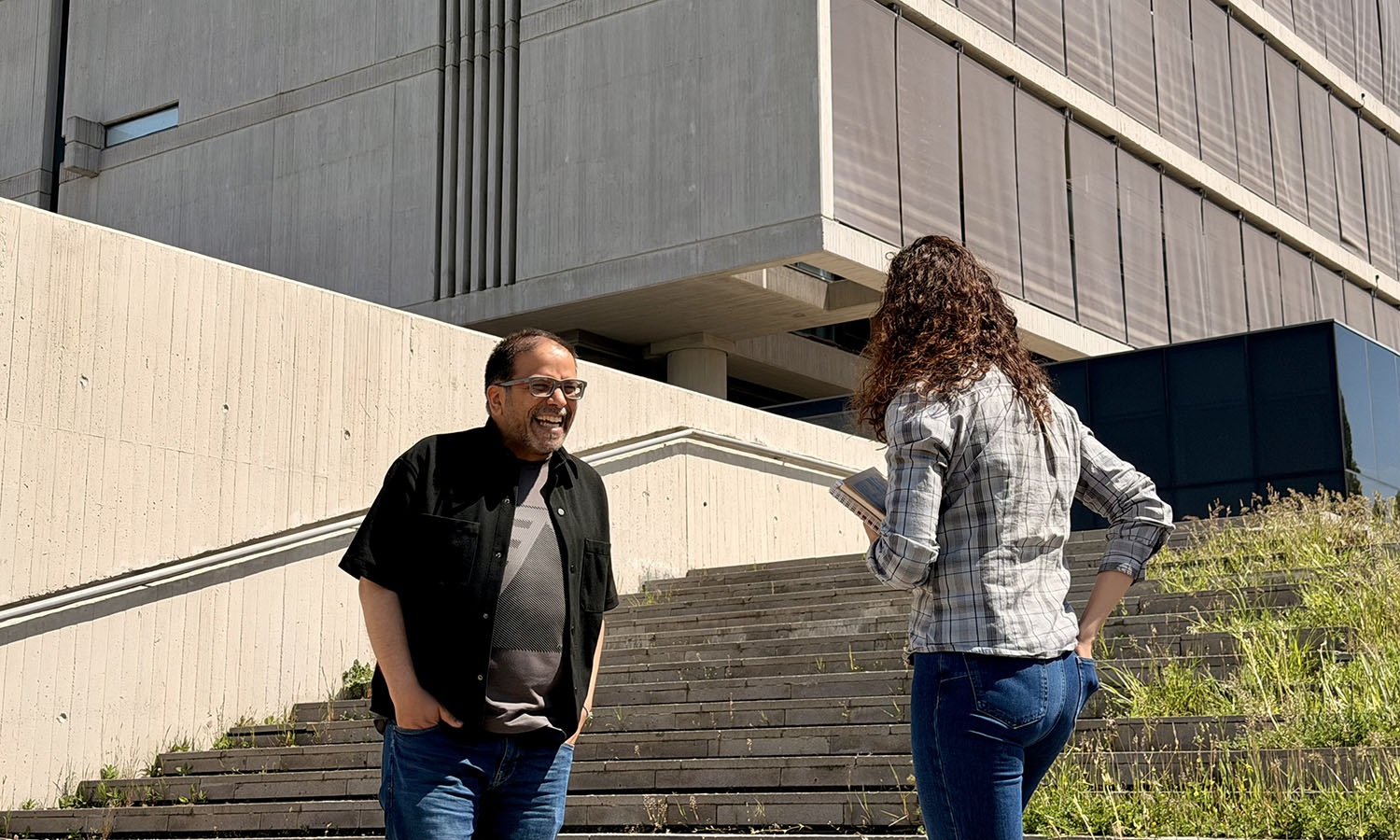
About Prof. Mecit H.Öztop
Professor in the Department of Food Engineering at Middle East Technical University and Presidential Advisor & Research Coordinator, with interdisciplinary expertise spanning food engineering, bioprocessing, biomaterials, and sustainable food systems. Holding a Ph.D. in Biological Systems Engineering from the University of California, Davis, with prior training in Food Engineering and an MBA, his research focuses on bio-based aerogels, alternative and microbial proteins, sustainable food processing, plant protein technologies, food waste valorization, and advanced food characterization. He leads a fully equipped research laboratory integrating cutting-edge technologies, including high-pressure homogenization, spray drying, freeze drying, supercritical CO₂ processing, cold plasma, and ultrasound-assisted systems for developing innovative food formulations and biomaterials. With an H-index of 45 (Scopus), he has an established publication record in high-impact journals and extensive leadership in international and national research projects, serving as coordinator or partner in major EU and TÜBİTAK-funded initiatives, including Horizon Europe, WIDERA, COST, PRIMA, and MSCA projects focused on alternative proteins, aerogels, food quality, and sustainable bioprocessing.
Some METU projects that are qualified for funding with the support of the Office of Research Coordination:
METU Digital Innovation Center (METU DTX)
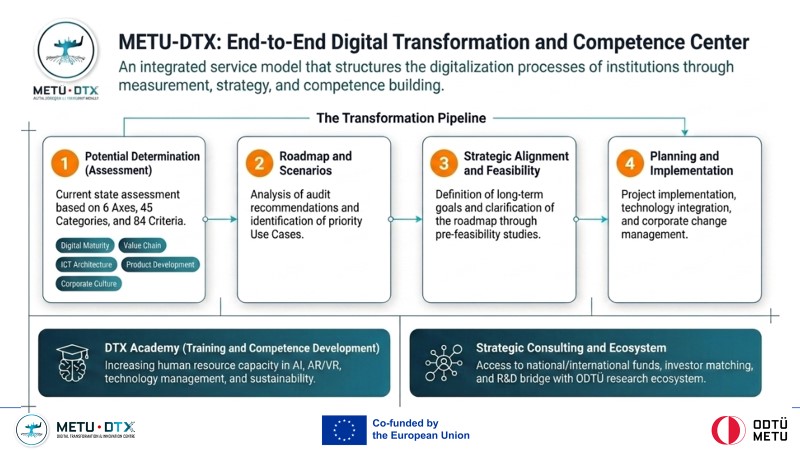
The METU Digital Innovation Centre Project is carried out by METU within the scope of the Competitive Sectors Program, financed within the framework of the financial cooperation of the European Union and Türkiye.
With a total project budget of 8.3 million Euros, METU DTX strengthens Türkiye’s capacity to lead digital production processes by providing cutting-edge infrastructure in areas like digital prototyping, virtual and augmented reality. It supports the integrated development of research, education, and entrepreneurship while representing a strategic enhancement of research and innovation ecosystem and marking a meaningful step in advancing university–industry collaboration.
The main objective of METU-DTX is to enhance the competitiveness and EU value chain integration of Türkiye’s manufacturing sector, particularly the machinery and automotive industries, through solution-driven R&D projects focused on smart products and digitalized processes. DTX also aims to improve the research and development capacity and collaboration between academia and industry for the enhancement of digital technology utilization by the manufacturing industry SMEs.
FAroGels (Food-Grade Aerogels for Sustainable Food Systems)
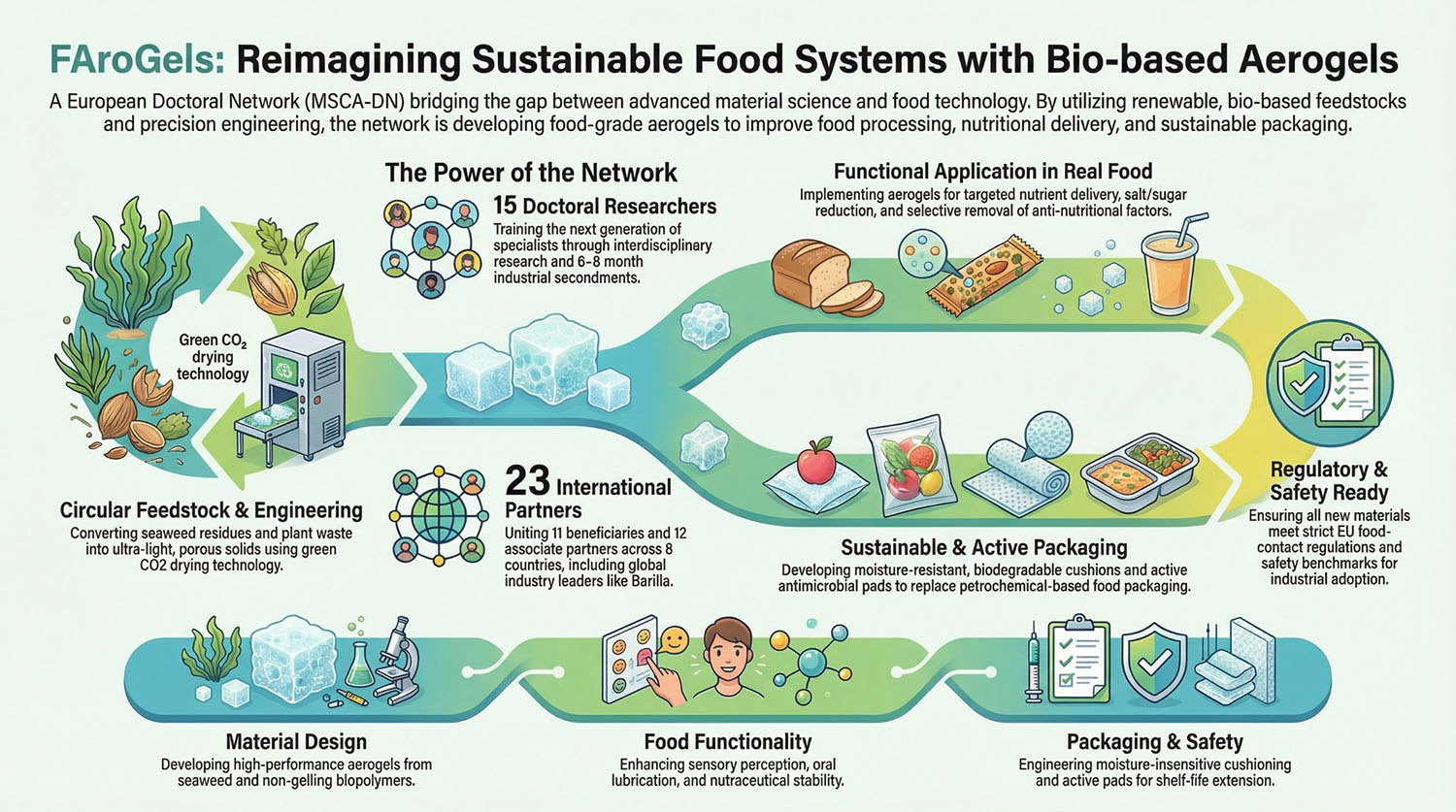
The FAroGels project (Food-Grade Aerogels for Sustainable Food Systems), coordinated by METU, has been selected for funding under the 2025 call of the Horizon Europe, Marie Skłodowska-Curie Actions (MSCA) Doctoral Networks (DN) Program.
Bringing together a strong and diverse international consortium of 23 partners, including 12 associated partners, from Türkiye, Germany, the United Kingdom, Spain, Italy, Finland, Poland, and Malta, the project stands out as a significant achievement. Notably, it marks the first time that METU has both applied for and secured funding as a coordinating institution from Türkiye under this highly competitive scheme.
Designed to train early-stage researchers who have not yet obtained their doctoral degrees, the project offers a rich, interdisciplinary, and international research environment. FAroGels aims to develop, test, and implement innovative food-grade aerogels for sustainable food applications. By doing so, it seeks to contribute to advancements in food safety, extend shelf life, and enable more efficient delivery of nutrients, ultimately supporting more resilient and sustainable food systems.
Beyond its scientific objectives, the project is also expected to foster cross-sectoral collaboration, enhance research capacity, and equip a new generation of researchers with the skills needed to address pressing global challenges in food sustainability.
METU Design Factory TECH2X
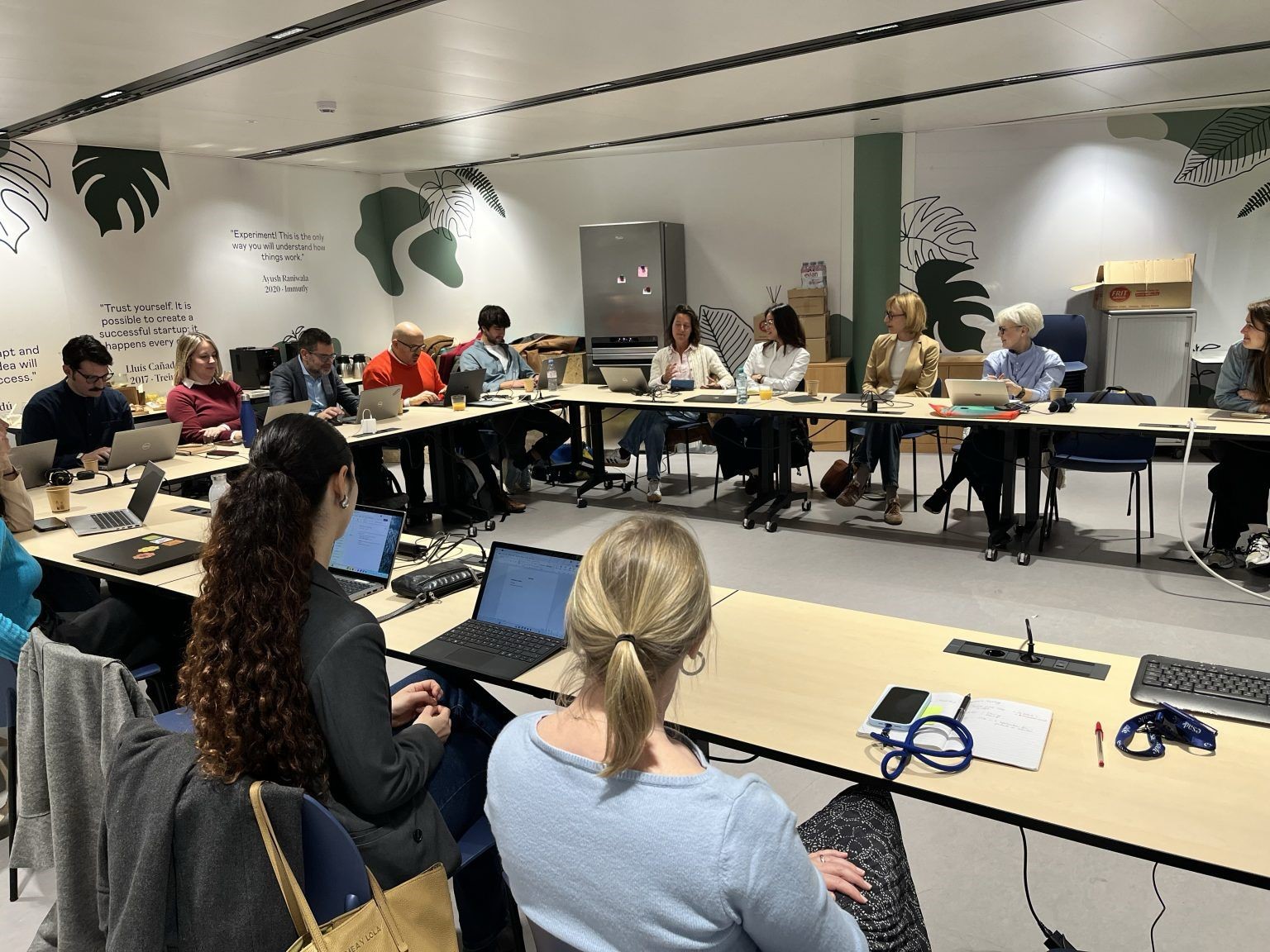
METU Design Factory took part in one of the leading innovation ecosystems with TECH2X project that has received funding from the European Institute of Innovation and Technology (EIT)’s Higher Education Initiative and supported by EIT Urban-Mobility.
TECH2X unites a diverse group of four Higher Education Institutions (HEIs), an experienced innovation hub-incubator-accelerator and a world-leading research organization, together with a further six HEIs as associated partners. The project collaboration draws on the strengths of business-focused, technical, and multidisciplinary institutions to address societal challenges and foster deep-tech innovation and entrepreneurship.
The actions and activities in TECH2X are designed to strengthen innovation and entrepreneurship capacity at institutional level, fostering pathways between challenge-based innovation courses that are technology driven, and entrepreneurship capacity building to move forward promising projects.
The project aims to boost the innovation and entrepreneurial capacity of the consortium’s HEIs to foster deep tech talent and respond to the need to transition towards the 4th generation university model.