

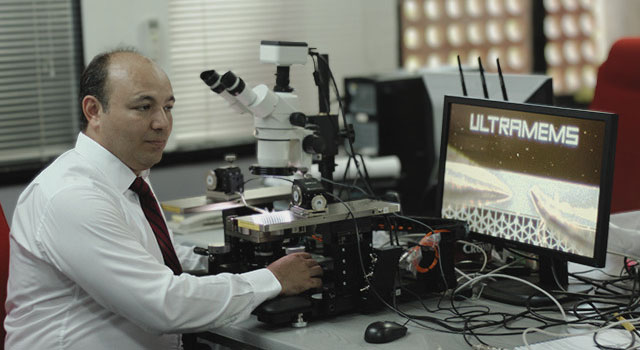
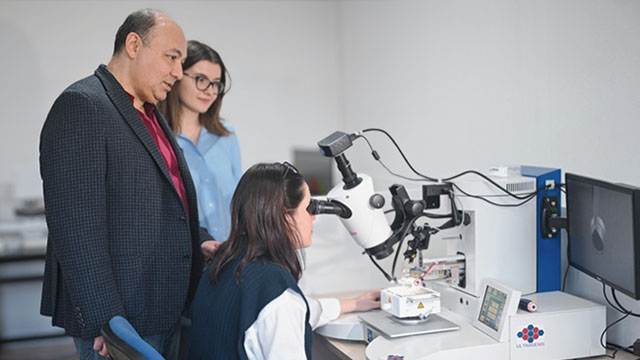
A recent research project developed by the ULTRAMEMS Research Group at Middle East Technical University (METU), under the leadership of Prof. Barış Bayram from the Department of Electrical and Electronics Engineering, offers a groundbreaking approach to emergency medical diagnostics. Titled “Artificial Senses: Micro-Systems That See with Diamond, Hear with Light, Think Like a Brain,” the project enables the detection of brain hemorrhages during ambulance transfer, with the potential to transform critical care practices and save lives through early intervention.
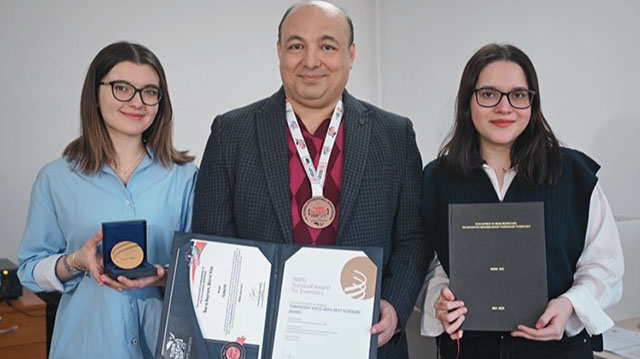
The project has received significant recognition, including the Elginkan Foundation Technology Award and the WIPO Best Academic Award at the TÜRKPATENT ISIF’25 Awards Ceremony of the 10th International Invention Fair, organized by the Turkish Patent and Trademark Office under the auspices of the Ministry of Industry and Technology.
An innovation that can reshape emergency medical procedures
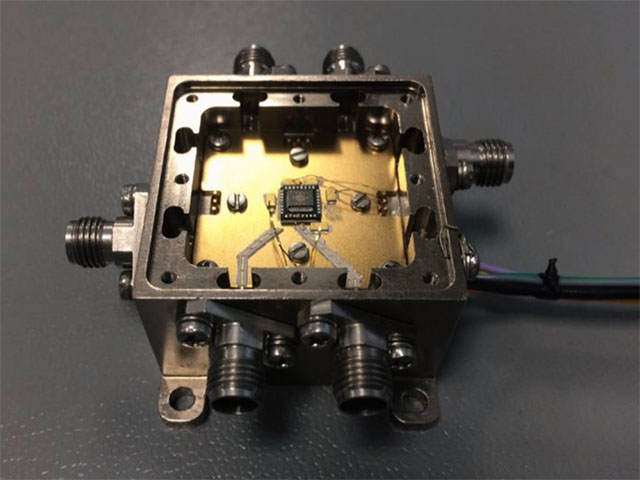
As explained by Prof. Barış Bayram, unlike conventional “gold standard” diagnostic devices, which are fixed within hospital settings, this newly developed technology operates using microwave-induced thermoacoustic sensing. The portable diagnostic solution developed by the team identifies brain hemorrhage on the way to the hospital. By effectively “hearing” the signals produced by a hemorrhage, the system allows for rapid diagnosis and timely intervention within minutes.
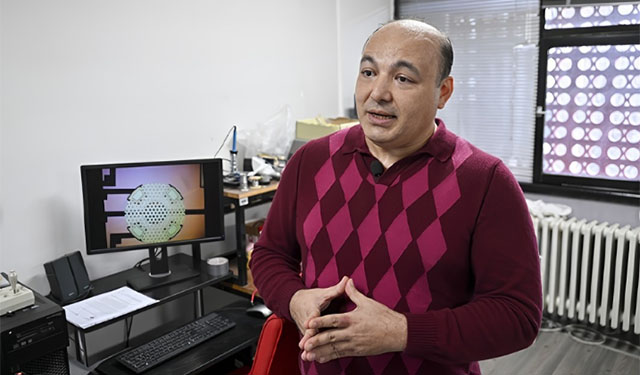
Prof. Bayram emphasized that the project goes beyond the development of a single device, describing it as an innovation that could reshape emergency medical procedures and save thousands of lives thanks to early intervention. He noted that the system leverages the molecular properties of diamond, the communication capabilities of light, and the efficiency of the human brain. Through its three core micro-system platforms, “Seeing with Diamond,” “Hearing with Light,” and “Thinking Like a Brain,” the project aims to shape the future of medical imaging, secure communication, and artificial intelligence hardware.
New forms of senses
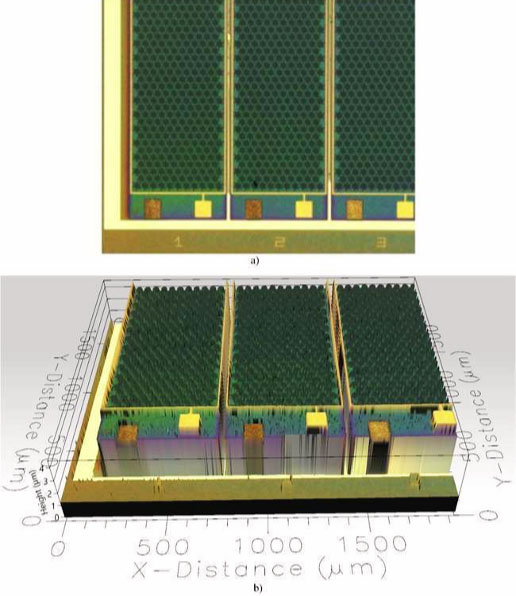
For the “Seeing with Diamond” component, the team has developed advanced biomedical ultrasonic imaging technologies, including a device capable of detecting brain hemorrhage by converting microwave-induced signals into perceivable acoustic data. Prof. Bayram emphasized that traditional silicon-based materials used in ultrasonic imaging have reached their physical limits due to issues such as heat and material fatigue. Diamond, on the other hand, is known as the hardest material in nature with exceptional thermal conductivity and offers vast potential in this regard. The team has successfully transformed diamond into a manufacturable chip, paving the way for a new era in medical imaging where even the smallest blood vessels and earliest-stage tumors can be visualized with unprecedented clarity. Prof. Bayram noted that these diamond-based sensor technologies could position Ankara as a future hub of advanced materials innovation, referring to it as a potential “Diamond Valley.”
 The “Hearing with Light” system introduces a fiber optic MEMS microphone capable of transmitting both energy and sound data solely through light. This innovation ensures operation even in environments with high electromagnetic interference, such as inside MRI machines. This newly developed technology represents more than a conventional microphone; it functions as a new form of sense that is capable of operating under extreme conditions, with potential applications extending from defense industries to space technologies.
The third component, “Thinking Like a Brain,” centers on the development of a MEMS-based neuristor that mimics the efficiency of the human brain by integrating memory and processing capabilities. The long-term goal with such a technological advancement is to enable AI systems to operate directly within devices, rather than relying on large remote servers, allowing data to be processed locally without being sent to the cloud, in a more secure and eco-friendly way.
Industrial and Global Impact
Highlighting the importance of the application of research outcomes in real-world contexts, Prof. Barış Bayram noted that innovations such as the MEMS neuristor could play a key role in addressing the global energy crisis and, when supported by industry collaborations, significantly strengthen Türkiye’s capacity for high-value technology exports. Outlining their broader vision, he added that the project represents an initial step in developing a wider technological advancement originating from Türkiye and expected to reach global scale. He pointed out that the most significant impact would emerge as these technologies become integrated into industry and everyday applications.